Signature · about 3 hours, with a 45-minute dough rest · Serves 4
Confit trout agnolotti del plin with ricotta and lemon
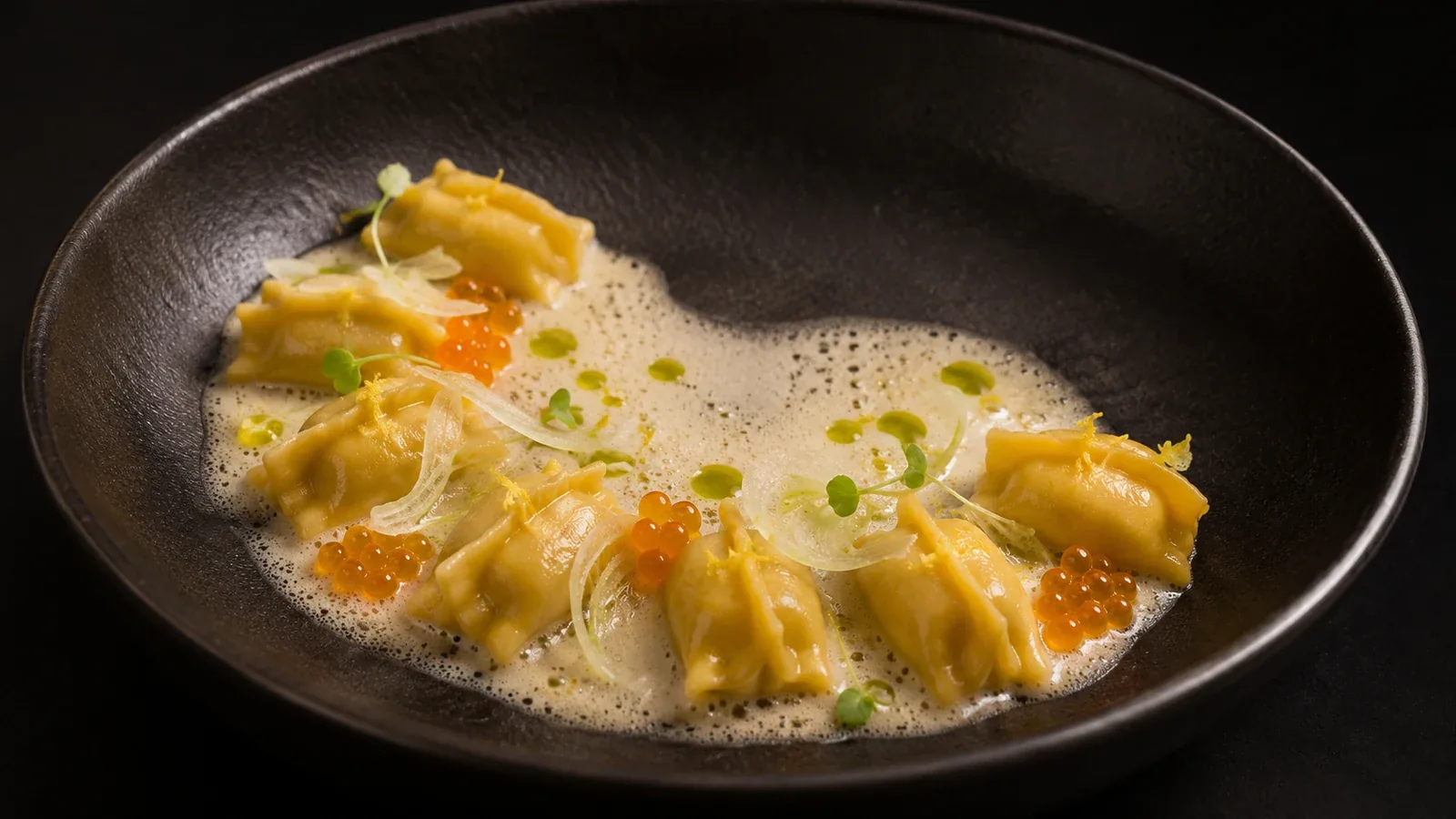
Illustrative image generated with AI, not a photo of the cooked dish.
Kitchen test pending
Agnolotti del plin from Piedmont: very thin egg pasta, pinched closed between each bite and glazed in a butter sauce. This version takes the Piedmontese pasta to Patagonian produce, with a soft, fresh, faintly citrusy trout filling and a clean, warm, elegant plate.
The twist is to treat the trout gently and add a subtle layer of Japanese umami. The trout is confited at low temperature to keep its moisture and flakes, then bound with well-drained ricotta, mascarpone, lemon, chives and parsley. The sauce is a beurre blanc mounted over a reduction of extra brut sparkling wine, fennel and shallot, plus a short stock made from the trout skin and trimmings and reinforced with katsuobushi. Trout roe, raw shaved fennel and tender sprouts add salt, freshness and texture.
Special equipment: pasta machine; piping bag; cutting wheel; optional sous vide circulator; kitchen thermometer
Ingredients
Pasta dough
- 220 g 00 flour
- 80 g fine durum wheat semolina
- 6 egg yolks
- 1 whole egg
- 10 g mild olive oil
- 2 g fine salt
Trout filling
- 300 g fresh trout fillet, skinless and boneless (reserve the skin and trimmings for the stock)
- Olive oil, a drizzle
- 35 g butter
- 30 g shallot, very finely chopped
- 40 ml dry white wine
- 180 g fresh ricotta, very well drained
- 40 g mascarpone or firm cream cheese
- 7 g chives, finely chopped
- 4 g parsley leaves, very finely chopped
- Finely grated zest of ¾ lemon
- Fine salt, white pepper and the barest pinch of nutmeg
- At most 1 drop of liquid smoke, optional, only if the stock does not contain katsuobushi
Short trout and katsuobushi stock
- 120–180 g trout skin and trimmings
- 450 ml cold water
- 60 ml dry white wine
- 30 g shallot
- 50 g fresh fennel
- 40 g leek
- 3 white peppercorns
- The tiniest tip of a bay leaf, optional
- 3 g katsuobushi, 5 g at most
Sparkling wine, fennel and katsuobushi beurre blanc
- 120 ml extra brut sparkling wine
- 20 ml cider vinegar or white wine vinegar
- 35 g shallot, finely chopped
- 40–50 g fennel, finely chopped
- 160 ml of the short trout stock
- 150–160 g cold butter, cubed
- 5 ml lemon juice
- Fine salt and white pepper
Shaping and cooking
- Semolina, for the tray
- Plenty of water and salt
Finishing
- 30–40 g trout roe, optional but recommended
- Very thin slices of raw fennel, in ice water
- Fennel fronds, chervil, microgreens or fine chives
- Finely grated lemon zest
- Chive or parsley oil, optional
Method
Pasta dough
- Kneading. Make a well with the flour and semolina and put the yolks, egg, oil and salt in the center. Work them together with a fork from the edges toward the center and, once the dough comes together, knead by hand for 8–10 minutes, until firm, smooth, satiny and elastic, with no stickiness. Wrap in plastic film and rest for at least 45 minutes at room temperature, or up to 12 hours in the refrigerator; in that case, take it out 30 minutes before rolling.
Trout filling
- Confit. Salt the trout lightly, leave for 10 minutes and pat dry. Cook it with a drizzle of oil in a vacuum bag at 48–50 °C (118–122 °F) for 18–22 minutes, or in a small dish with oil, covered with parchment paper touching the surface, in an oven at 80 °C (175 °F) for 12–16 minutes. It should be moist, barely cooked and flake apart. Let it cool slightly and flake it gently, without overworking it.
- Aromatic base. Melt the butter, cook the shallot over low heat for 5–6 minutes without browning, deglaze with the wine and reduce until no visible liquid remains. Cool.
- Mixing. Gently combine the trout with the ricotta, mascarpone, reduced shallot, chives, parsley, zest, pepper, nutmeg and, if using, the liquid smoke. For a finer texture, pass through a sieve or briefly process only half and fold it back into the rest, which keeps its flakes. Adjust the salt at the end. It should be smooth, fresh, faintly citrusy and never runny. Transfer to a piping bag and refrigerate for 30 minutes before shaping.
Short trout and katsuobushi stock
- Cleaning. Scrape the scales off the skin if it has any. If the trimmings smell strong, soak them for 10 minutes in cold water with a pinch of salt, rinse and dry.
- Cooking. In a small pot, combine the water, wine, shallot, fennel, leek, peppercorns and, if using, the bay leaf, and cook the vegetables for 8 minutes at a very gentle simmer. Lower to the minimum, add the skin and trimmings and cook for 10–12 minutes with the surface barely trembling, skimming if needed. Turn off the heat, rest for 5 minutes and strain without pressing too hard. Reduce gently to 180–200 ml.
- Katsuobushi. When the stock drops to 75–80 °C (167–176 °F), add the katsuobushi, infuse for 3–4 minutes and strain through a fine sieve. It is an accent: it must never boil or dominate.
Sparkling wine, fennel and katsuobushi beurre blanc
- Reduction. Over medium heat, reduce the sparkling wine with the vinegar, shallot and fennel until only 2–3 tablespoons of liquid remain. Add 160 ml of the short stock and reduce slightly, to concentrate without over-salting.
- Mounting. Lower the heat to the minimum and whisk in the cold butter cube by cube, without stopping and without letting it boil: keep it between 55 and 65 °C (131–149 °F) so it does not split. Once glossy and velvety, finish with the lemon, salt and white pepper, and strain for a finer sauce.
Shaping and cooking
- Shaping. Roll the dough into sheets 0.6–0.8 mm thick, working one strip at a time and keeping the rest covered. Pipe 8–10 g portions of filling, fold the dough over the filling and press around each portion to push out all the air. Pinch between each mound to form the plin and cut with a straight or fluted wheel. Arrange on a tray with semolina, covered with a dry cloth.
- Cooking and glazing. Cook them in plenty of salted water at a sustained but not violent boil for 2–3 minutes, depending on the thickness of the dough. Transfer them straight to a pan with part of the beurre blanc, add a spoonful of cooking water if needed and glaze for 30–40 seconds, moving the pan gently: they should end up just coated, glossy and delicate.
Finishing
- Foam. Foam the remaining beurre blanc with a hand blender right before serving. Drain and pat dry the fennel slices.
The dish
Use warm, low, wide bowls or black ceramic plates. Arrange 7–9 agnolotti per serving in an irregular crescent or an organic line, and spoon the foamed beurre blanc around them without fully covering the pasta. Add small teaspoons of trout roe between some of the agnolotti and finish with thin slices of raw fennel, delicate sprouts, a minimal grating of lemon zest and, if using, a few drops of green oil. Final look: golden, glossy pasta, ivory foamy sauce, the translucent orange of the roe and very measured touches of green.
Key points
- Drain the ricotta well: a wet filling splits the agnolotti open and loses structure.
- Confit the trout only just: it should stay moist and in flakes.
- Push out all the air when closing each portion, before pinching the plin.
- Do not boil the katsuobushi or the beurre blanc, which splits above 65 °C (149 °F).
- Glaze for only 30–40 seconds, so the pasta ends up just coated.
Pairing
A Patagonian Chardonnay with subtle lees aging, good acidity and no excessive oak. The same extra brut sparkling wine used in the sauce also works, as long as it has tension and freshness.
Notes
- Sparkling wine: use extra brut, brut nature or nature. Avoid sweet, demi-sec or very aromatic ones. It does not need to be expensive, because the reduction loses the fine nuances, but it should have good acidity and little sweetness.
- Katsuobushi: the recommended amount is 3 g; go up to 5 g only for more depth. With katsuobushi, do not add liquid smoke.
- Lightly cooked trout: the confit leaves the trout barely cooked, and the final cooking of the pasta finishes heating the filling. Use very fresh trout and keep the filling at 5 °C (41 °F) or below until shaping.