Signature · about 2 h 15 min; 45 min active work · Serves 4
Tenderloin escalopes with red wine, pine mushrooms in two textures and roasted-potato purée
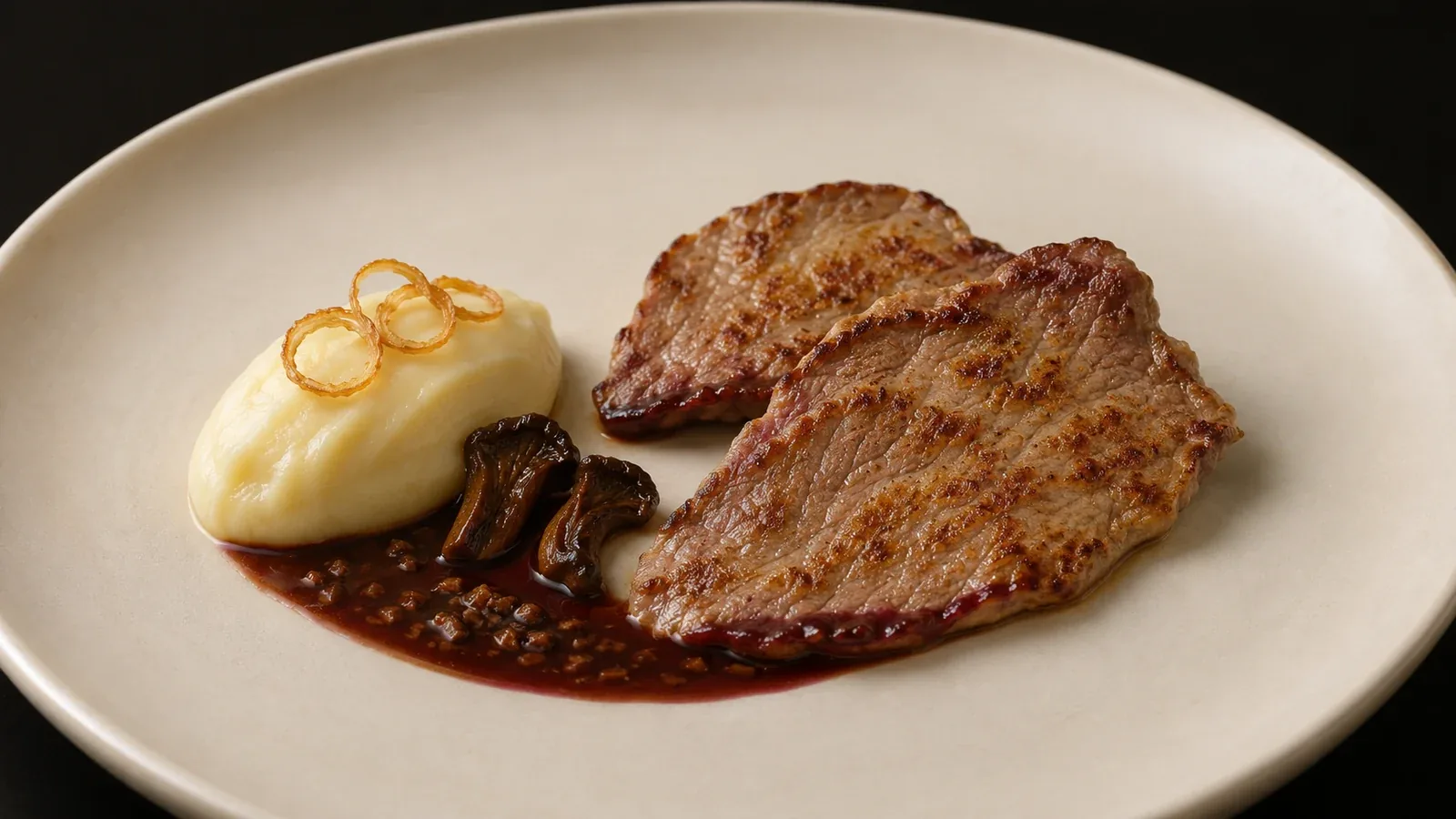
Illustrative image generated with AI, not a photo of the cooked dish.
The root is a thin beef escalope coated in flour, pan-fried and served with red-wine and pine-mushroom sauce made from its fond, alongside a purée. That bite is immediately recognizable here: golden edge, tender beef, meaty mushrooms and sauce that can be gathered up with the potato.
The twist is to separate the flavors and bring them back together. Some mushrooms are finely chopped and cooked in the jus to give it body; the rest are browned in pieces and keep their bite. The wine is reduced before stock and soaking liquid are added, concentrating its aroma without leaving a watery sauce; the skillet fond goes in at the end. Butterflied tenderloin receives only a veil of flour and a brief pan-fry. The purée starts with roasted potato, drier and toastier than boiled potato, and is finished with butter; crisp shallots provide a contrast that must stay dry at service.
Special equipment: 28–30 cm heavy skillet; potato ricer or sieve; fine strainer
Ingredients
Pine mushrooms in two textures
- 35 g dried pine mushrooms, purchased for culinary use.
- 300 ml hot water for soaking.
- 15 ml neutral oil.
- 15 g butter.
- Fine salt.
Roasted-potato purée
- 1 kg floury potatoes of similar size.
- 90 g cold butter, cubed.
- 130–170 ml hot whole milk.
- 7 g fine salt, plus more to adjust.
Crisp shallots
- 2 medium shallots, about 80 g total.
- 150 ml neutral oil for frying.
- Fine salt.
Tenderloin escalopes
- 700 g trimmed center-cut beef tenderloin.
- 45 g 00 flour for dusting; excess is shaken off.
- 8 g fine salt.
- Freshly ground black pepper.
- 25 ml neutral oil for the skillet.
- 25 g butter.
Red-wine and mushroom jus
- The browned fond from the escalope skillet.
- 1 small shallot, about 40 g, finely chopped.
- 10 ml neutral oil to sweat the shallot.
- 10 g tomato paste.
- 400 ml dry red wine with moderate tannins.
- 450 ml unsalted or low-salt, full-bodied beef stock.
- Half of the soaked, finely chopped mushrooms from the first section.
- 1 thyme sprig.
- 8 ml red wine vinegar.
- 25 g cold butter, cubed.
- Fine salt and black pepper.
Method
Pine mushrooms in two textures
- Soak and filter. Cover the mushrooms with 300 ml hot water, cover and leave for 25–30 minutes until pliable. Lift them out without dragging up sand from the bottom. Filter the liquid through a coffee filter or fine cloth and measure 120–150 ml of clear liquid; discard the sediment. Chop half the mushrooms very fine for the jus and cut the rest into 1–2 cm pieces.
- Brown the visible portion. Heat 15 ml oil in a skillet over medium-high heat. Brown the larger pieces for 3–4 minutes, without crowding, until they lose moisture and have toasted edges. Add the 15 g butter, move for 30 seconds, salt lightly and reserve. The finely chopped mushrooms go into the jus later; do not sauté them with the pieces.
Roasted-potato purée
- Roast. Heat the oven to 200 °C (390 °F). Pierce the potatoes, put them on a tray and roast for 55–70 minutes, depending on size, until a skewer goes through the center without resistance and the skin is dry. Open them while hot, scoop out all the flesh and pass it immediately through a ricer or sieve. Weigh or estimate usable flesh: adjust the purée by texture, not by an assumed yield.
- Emulsify. Work the cold butter into the hot flesh in two or three additions until it disappears. First add 130 ml hot milk and the 7 g salt, mixing with a spatula; add more milk gradually only until the purée falls slowly from the spoon and holds a soft ridge on the plate. Adjust salt. Keep covered over a water bath at 60 °C (140 °F) or above if holding hot; do not boil or overwork it, as potato becomes elastic.
Crisp shallots
- Fry. Cut the shallots into thin, even rings; separate and dry them well. Heat the oil in a small saucepan to 150–160 °C (300–320 °F) and fry the shallots for 4–6 minutes, moving them, until light golden. Remove them before their final color: they continue to darken out of the oil. Drain on paper, salt lightly and leave uncovered; if they become damp, they lose the intended contrast.
Tenderloin escalopes
- Cut. Divide the tenderloin into 8 medallions of about 85–90 g and about 2 cm thick. Butterfly each one without cutting it apart and flatten it between sheets of paper to an even 7–8 mm. Dry thoroughly. Salt and pepper just before cooking; pass through flour and shake off enough to leave only a thin film. Prepare all four portions before heating the skillet, without stacking the floured pieces.
- Pan-fry in batches. Heat the heavy skillet over medium-high heat with half the oil and butter. When the butter foams without burning, add 2 escalopes. Cook for approximately 60–90 seconds per side, according to actual thickness and heat, until hazelnut-brown outside and cooked but still supple at the center; cut open a test piece to adjust the next batch. Move to a warm platter in a single layer. Repeat with the rest, replenishing oil and butter; if flour on the bottom turns black, remove only the burnt particles with paper before continuing. Do not hold the beef submerged in sauce: it softens the crust.
Red-wine and mushroom jus
- Base before the beef. In a small saucepan, sweat the chopped shallot over medium heat for 2 minutes in the 10 ml oil; add the tomato paste and cook for 1 minute until brick-colored. Pour in the wine and reduce at a lively boil to about one quarter of its volume, about 8–12 minutes; it should smell of cooked wine and look dense, without a harsh alcoholic bite.
- Build depth. Add the beef stock, 120 ml filtered mushroom liquid, the finely chopped mushrooms and thyme. Reduce over medium heat for 12–18 minutes until there are about 280–320 ml of jus that coats the back of a spoon. Remove the thyme. If it concentrates too much, correct with the remaining filtered mushroom liquid. Reserve hot for the finish.
- Recover the fond and finish. After pan-frying the beef, remove excess fat and all black flour particles, leaving the brown fond. Pour 60 ml of the hot base into the skillet, scrape for 30–45 seconds and return that liquid to the saucepan with the rest. Add the browned mushrooms and heat for 1 minute. Add any juices released by the beef, the vinegar, salt and pepper. Off the heat, mount with the 25 g cold butter, moving the pan until the jus is glossy and fluid. Do not boil it afterward.
The dish
Use wide warm flat plates. Put a generous spoonful of roasted-potato purée to one side of the center and spread it just enough to form a low base. Set two escalopes on each plate, partly overlapping and with their golden edges visible. Put the mushroom pieces beside the beef and distribute the jus around it and over a stripe of each escalope, without wetting the whole surface. Let a little jus touch the purée so each bite can bring together beef, wine, mushroom and potato. Finish with a few crisp shallot rings on the purée, away from the sauce. The final reading is hazelnut-brown beef, dark glossy garnet jus, meaty mushrooms, ivory purée and a dry golden crunch.
Key points
- Filter the mushroom liquid: sand ruins an otherwise silky jus.
- Keep only a veil of flour on the beef; excess forms a pasty layer and burns on the skillet bottom.
- Reduce the wine before the stock, and remove black particles before deglazing.
- The tenderloin is thin: cook a test piece and adjust each batch's timing, without holding it in the sauce.
- Mount the jus off the heat and add shallots last to keep shine and crunch.
Pairing
A dry, medium-bodied red with moderate tannins, served slightly cool, accompanies the jus without making the dish heavy. Without alcohol, mild cold black tea with a few drops of red grape juice.
Notes
- Beef stock may be made ahead; choose a low-salt one because it reduces considerably. If store-bought, avoid very salty concentrates.
- Soaked mushrooms, purée and jus are perishable: if made ahead, cool promptly in shallow containers and refrigerate at 5 °C or below. Reheat cooked and cooled preparations to 74 °C (165 °F) at the center before finishing the emulsion and serving; cook the beef and shallots at service.
- The real height, thickness and doneness of the escalopes, the reduction and the purée yield need confirmation in the first physical test.