Essential · 2 hours 30 minutes, plus 2 hours of draining · Serves 4
Ricotta and asparagus ravioli with brown butter and lemon
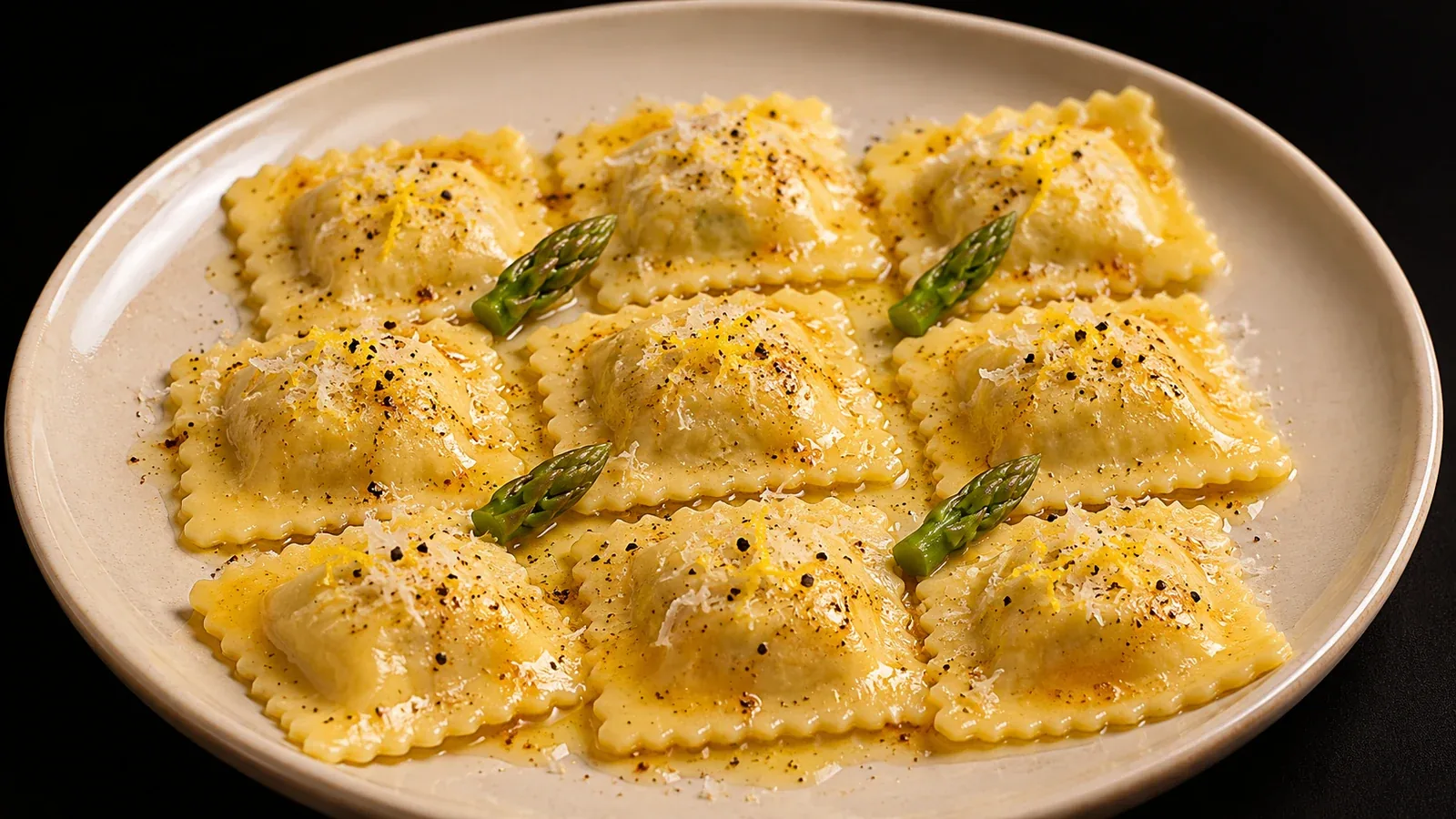
A filled pasta of Italian root in which the asparagus stays recognizable. The tender stalks are cooked and mixed with drained ricotta to form a fresh, stable filling; the tips are set aside for the finish, where they keep texture and a more direct flavor.
The brown butter brings toasty notes and the lemon cuts the fat without turning the sauce into the dominant element. The dish is completed with Parmigiano Reggiano and cooking water: it needs no cream, nuts or a second sauce.
Special equipment: pasta machine; piping bag recommended
Ingredients
Pasta dough
- 250 g 00 flour, plus more for rolling
- 100 g egg without shell, about 2 large eggs
- 36 g yolks, about 2 units
- 5–15 ml water, only if the dough does not come together
- 30 g fine semolina, for the trays
Asparagus and filling
- 400 g medium green asparagus
- 220 g fresh ricotta, which should yield at least 150 g once drained
- 25 g finely grated Parmigiano Reggiano or Parmesan-style cheese
- 1 yolk, about 18 g
- Finely grated zest of ½ lemon
- 2 g fine salt, plus more to adjust
- White pepper, to taste
- 1 pinch of nutmeg
- 8 g coarse salt for the blanching water
Brown butter and finishing
- 120 g unsalted butter
- 15 ml olive oil
- Finely grated zest of ½ lemon
- 10 ml lemon juice, plus a few drops if needed
- 25 g finely grated Parmigiano Reggiano or Parmesan-style cheese
- Freshly ground black pepper, to taste
- 3 liters water and 30 g coarse salt, to cook the pasta
- 60–90 ml pasta cooking water, as needed
Method
Pasta dough
- Kneading the pasta. Put the flour on the counter or in a bowl and add the eggs and yolks. Combine until large crumbs form. Knead for 8–10 minutes, adding water 5 ml at a time only if dry areas remain that do not come together. The finished dough should be firm, smooth and elastic, not sticky. Wrap and rest 45 minutes at room temperature, or refrigerate up to 12 hours and temper 30 minutes before rolling.
Asparagus and filling
- Draining the ricotta. Put the ricotta in a fine sieve over a bowl, cover and refrigerate at least 2 hours. Weigh 150 g already drained. It should keep its shape on a spoon and not release whey when gently pressed; if still wet, extend the draining.
- Separating and cooking the asparagus. Snap or cut off the fibrous bases. Set aside 16 tips of about 6 cm and cut the remaining tender stalks into 1 cm rounds. Boil 1 liter of water with 8 g of salt. Blanch the tips for 60–90 seconds, until the green intensifies and they still offer resistance; move them to ice water. Cook the stalks for 3–5 minutes, until they can be mashed with a fork, and cool them the same way. Drain and dry both parts very well.
- Concentrating the stalks. Chop or briefly process the cooked stalks without turning them into a smooth cream. Weigh 120 g and take them to a dry pan over medium-low heat for 2–4 minutes, stirring, until they lose the excess moisture and the spoon leaves a clean furrow. Spread on a plate and cool quickly. If tender asparagus is left over, set it aside with the tips for finishing.
- Preparing the filling. Mix the 120 g of cold stalks with the 150 g of drained ricotta, 25 g of cheese, the yolk, the zest of ½ lemon, nutmeg, pepper and 2 g of salt. Adjust after tasting a teaspoon cooked in water or a pan; do not taste the filling raw. It should hold a firm dollop. Transfer to a piping bag and refrigerate 20–30 minutes.
- Rolling the dough. Divide it into four parts and keep the unused ones covered. Flatten a portion and pass it through the machine from the widest setting, folding it in thirds twice at the start. Continue thinning without folds to sheets of approximately 0.7 mm: flexible and barely translucent, but able to hold the filling. Flour only as much as needed so they do not stick.
- Forming the ravioli. Work with two sheets at a time. Distribute 8 g portions of filling, spaced to obtain squares of about 6 cm. Lightly moisten around the filling if the dough is dry, cover with the second sheet and press from the filling outward to push out the air. Cut and check the seal. There should be 36 ravioli. Arrange them without overlapping on trays dusted with semolina and keep them covered; refrigerate if not cooked within 30 minutes.
Brown butter and finishing
- Making the brown butter. Melt the butter in a wide pan over medium heat. Continue cooking for 4–6 minutes: first it will foam and then the solids at the bottom will take on a hazelnut color and a nutty aroma. Remove immediately from the heat and transfer to a heatproof container to stop the cooking. Do not wait for the solids to turn dark brown.
- Browning the tips. Dry the tips again. Heat the olive oil in the same pan over medium-high heat and sauté them for 2–3 minutes, until golden areas appear and the center is tender but firm. Remove and keep warm.
- Cooking the ravioli. Bring 3 liters of water with 30 g of salt to a gentle boil. Cook the ravioli in two batches for 3–4 minutes from when the water recovers the boil. Move them once carefully. Taste one from the first batch: the pasta should be tender with no floury edge and the filling piping hot. Reserve 150 ml of water before draining with a slotted spoon.
- Emulsifying and finishing. Return to the pan 90 g of the brown butter, including part of its toasted solids, and add 60 ml of cooking water. Move over medium-low heat until a glossy emulsion. Add the ravioli and glaze 30–45 seconds, adding cooking water by spoonfuls if the sauce splits or becomes too dense. Turn off the heat, add 10 ml of lemon juice and the remaining zest. Taste and correct with a few more drops of lemon, salt or pepper; the result should be buttery but fresh.
The dish
Use low, warm, light-colored deep plates. Divide 9 ravioli on each plate, in a slightly overlapping circle, and coat them with the brown butter and lemon emulsion, letting part pool at the bottom without flooding them. Arrange 4 asparagus tips per serving among the ravioli, tips up and in different directions, so they show. Distribute the grated cheese over the pasta, finish with a minimal grating of lemon zest and black pepper, and serve immediately, while the sauce is still glossy and the pasta flexible. Final look: glossy pale-yellow ravioli, the golden butter at the bottom, the intense green of the asparagus tips and a veil of cheese.
Key points
- The ricotta and stalks must lose moisture before mixing; a watery filling softens the dough and favors openings.
- Trapped air expands during cooking: push it out and check the whole perimeter before cutting.
- Cooking at a gentle boil and in two batches avoids knocks, excessive drop in temperature and stuck ravioli.
- Remove the brown butter when the solids are hazelnut-colored; the residual heat can take it from toasted to burnt.
- Add the lemon off the heat and adjust by taste to keep the balance between vegetal, dairy and butter.
Pairing
A Sauvignon Blanc with a moderate herbal profile and good acidity goes with the asparagus and cleans the butter. As a non-alcoholic alternative, use very cold sparkling water with a strip of lemon peel, unsweetened.
Notes
- Raw ravioli are best freshly formed. To keep them more than 3 hours, freeze them without overlapping on a tray until firm and then bag them; cook them without thawing, extending approximately 1–2 minutes and checking doneness on one piece. The recommended freezer window for quality is 2 weeks.
- The hydration of the dough can vary with the actual size of the eggs and the absorption of the flour. The extra water is an adjustment, not a mandatory amount: a barely firm dough loosens during the rest.