Essential · about 2 hours, with overlapping rests · Serves 4
Ham, cheese and mozzarella sorrentinos
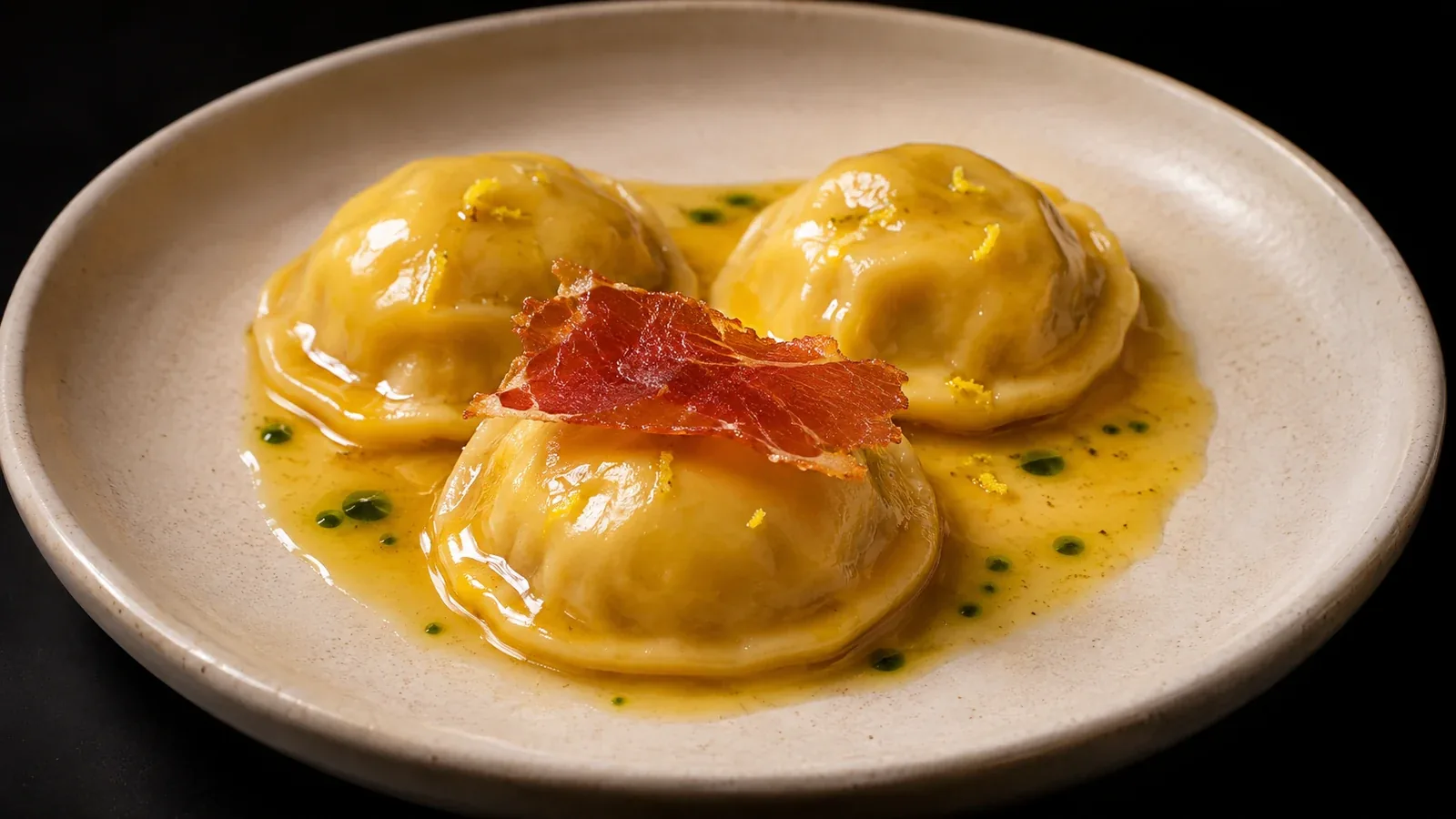
The ham and cheese sorrentino (large, round stuffed pasta) of Argentine pasta shops: fresh egg pasta, round and generous, with a filling that melts when cut. The recipe keeps that familiar flavor and makes it at home with a yolk and semolina dough, firm and thin, and a creamy filling that does not escape in the boil.
The filling adds two hams, cooked and cured, and four cheeses bound with ricotta and mascarpone, with a hint of whole-grain mustard. Instead of the cream sauce, the sorrentinos are glazed in a ham beurre monté: butter emulsified in a reduced ham stock, glossy and light. A green chive oil and a crisp cured ham tuile add color, freshness and texture.
Special equipment: pasta machine; sorrentino mold optional; blender
Ingredients
Sorrentino dough
- 300 g 00 flour
- 100 g rimacinata (twice-milled) semolina
- 3 egg yolks
- 2 eggs
- 15 g olive oil
- 5 g salt
- 20 to 40 ml water, only if needed
Ham, cheese and mozzarella filling
- 150 g good-quality cooked ham
- 50 to 60 g cured ham
- 100 g well-drained ricotta
- 60 g mascarpone
- 120 g mozzarella
- 60 g grated provolone
- 20 g finely grated Parmesan-style cheese
- 1 teaspoon whole-grain mustard
- White pepper and a pinch of nutmeg
- 5 to 10 g cornstarch or very fine breadcrumbs, only if needed
Shaping
- Semolina, for the tray
- Flour, for dusting
Crisp ham tuile
- 4 thin slices of cured ham
Chive oil
- 30 g chives
- 100 ml neutral oil
Ham beurre monté
- 150 ml concentrated ham stock
- 120 g cold butter, in cubes
- 20 to 30 ml dry white wine, optional
- White pepper
- 1 lemon, for a few drops of juice and, if you like, zest at serving
Cooking
- Plenty of water
- Salt
Method
Sorrentino dough
- Kneading. Mix the flour, semolina and salt, and form a well on the counter. Put the eggs, yolks and oil in the center, beat them lightly with a fork and incorporate the flour from the edges little by little. When it takes body, knead by hand 8–10 minutes, until smooth, firm, elastic and barely moist, not sticking. If it is very dry, add water 5 ml at a time.
- Resting. Form a ball, wrap it well and rest at least 30 minutes; the result is better with 45–60 minutes.
Ham, cheese and mozzarella filling
- Mozzarella. The moisture of the cheese is one of the most important points of the recipe. If it is a low-moisture one, grate it coarsely or cut it into very small cubes and leave it 10 minutes on paper towels. If fresh, cut it into small pieces and drain it in a sieve, in the refrigerator, for several hours or better overnight; pat dry with paper towels before using.
- Mixing. Cut the cooked ham into very small cubes and finely chop the cured. Mix the ricotta with the mascarpone to a creamy base and add the mozzarella, provolone, Parmesan and both hams. Add the mustard, white pepper and a pinch of nutmeg, and mix without overworking. Taste before correcting the salt: the hams and cheeses already bring plenty.
- Texture. The filling should be moist and creamy but compact, firm enough to form portions. If too wet, add 5–10 g of starch or fine breadcrumbs. Cover and refrigerate at least 30 minutes before assembling.
Shaping
- Rolling. Divide the dough into 4 parts and keep the unused ones covered. Flatten one and pass it through the machine from the thickest setting, lowering one setting at a time to 1 mm: it should be thin and delicate, but not so much that it tears with the filling. Cut two sheets of similar size.
- Assembly. Lay a sheet on the mold or on the lightly floured counter and distribute 25–30 g portions of filling, well spaced. Very lightly moisten the dough around if dry and cover with the second sheet. Press first around each mound, from the filling outward, to push out all the air, and then seal the edges firmly. Cut the sorrentinos, check them one by one so there are no openings and arrange them on a tray with semolina. Keep them covered in the refrigerator until cooking.
Crisp ham tuile
- Baking. Preheat the oven to 110–120 °C (230–250 °F). Put the cured ham slices between two sheets of parchment paper, with a second tray on top so they stay flat, and bake 20–30 minutes, removing the top tray in the last minutes if needed. They should be completely dry and crisp; as they cool they gain even more crispness. Store in a dry container.
Chive oil
- Blanching. Blanch the chives 10 seconds in boiling water, move them to ice water, drain very well and pat dry carefully.
- Blending. Process with the oil 2–3 minutes. To intensify the color, gently take the mixture to about 60 °C (140 °F). Filter through a very fine sieve or a cloth and store in a jar or squeeze bottle.
Ham beurre monté
- Reduction. In a wide pan, reduce the ham stock over medium heat, with the wine if using, to concentrate the flavor.
- Mounting. Lower the heat to the minimum and add the butter in cubes, moving the pan or whisking constantly, without letting it boil: boiling splits the emulsion. Continue to a glossy, silky, barely thick sauce. Add a few drops of lemon and white pepper, and taste before salting. Keep it warm, between 60 and 70 °C (140–158 °F).
Cooking
- Boiling. Bring plenty of water with moderate salt to a boil. Carefully add the sorrentinos and stir gently once so they do not stick to the bottom. Cook 3–5 minutes, depending on the thickness of the dough.
- Glazing. Move them with a slotted spoon straight to the beurre monté pan, add a small spoonful of the cooking water and move the pan gently 30–60 seconds, until they are glossy and coated.
The dish
Serve 3 sorrentinos per plate, on flat or slightly deep plates, warmed. Put a little beurre monté at the base and arrange the three sorrentinos in a triangular or diagonal composition, only lightly coated with the sauce. Add small drops of chive oil over the sauce, rest a ham tuile on one of the sorrentinos and, if you like, finish with a minimal amount of fine lemon zest. The dish should look clean and uncluttered. Final look: yellow, glossy pasta, golden, lustrous sauce, the green of the chives in drops and the reddish, crisp tuile as the only volume.
Key points
- Avoid a watery filling: the mozzarella and ricotta must be well drained, or the pasta tears in the boil, is hard to seal and the sorrentino releases liquid.
- Leave no air inside: press from the filling toward the edges, because the bubbles expand in cooking and break the pasta.
- Control the salt: the hams, provolone and Parmesan are already salty. Always taste the filling before correcting.
- Do not boil the beurre monté: a high temperature splits the butter and the creamy sauce turns oily.
Pairing
A lightly aged Chardonnay, a Brut Nature sparkling wine or a young, fresh Pinot Noir: its acidity balances the fat of the mozzarella, butter and cheeses.
Notes
- Yield to confirm: the original recipe indicates 12 large sorrentinos, 3 per plate, with 25–30 g of filling each, but the full filling weighs about 565 g and is enough for about 20 pieces of that size. In the first test, record how many sorrentinos result and whether it is better to enlarge the filling portions or reduce the mixture.
- Ham stock: the source asks for it as an input and does not explain how to make it. Defining its preparation is pending; meanwhile, use a homemade or store-bought ham stock, with no added salt.