Essential · 2 h 45 min plus 8–12 h of soaking · Serves 4
Charro beans casserole
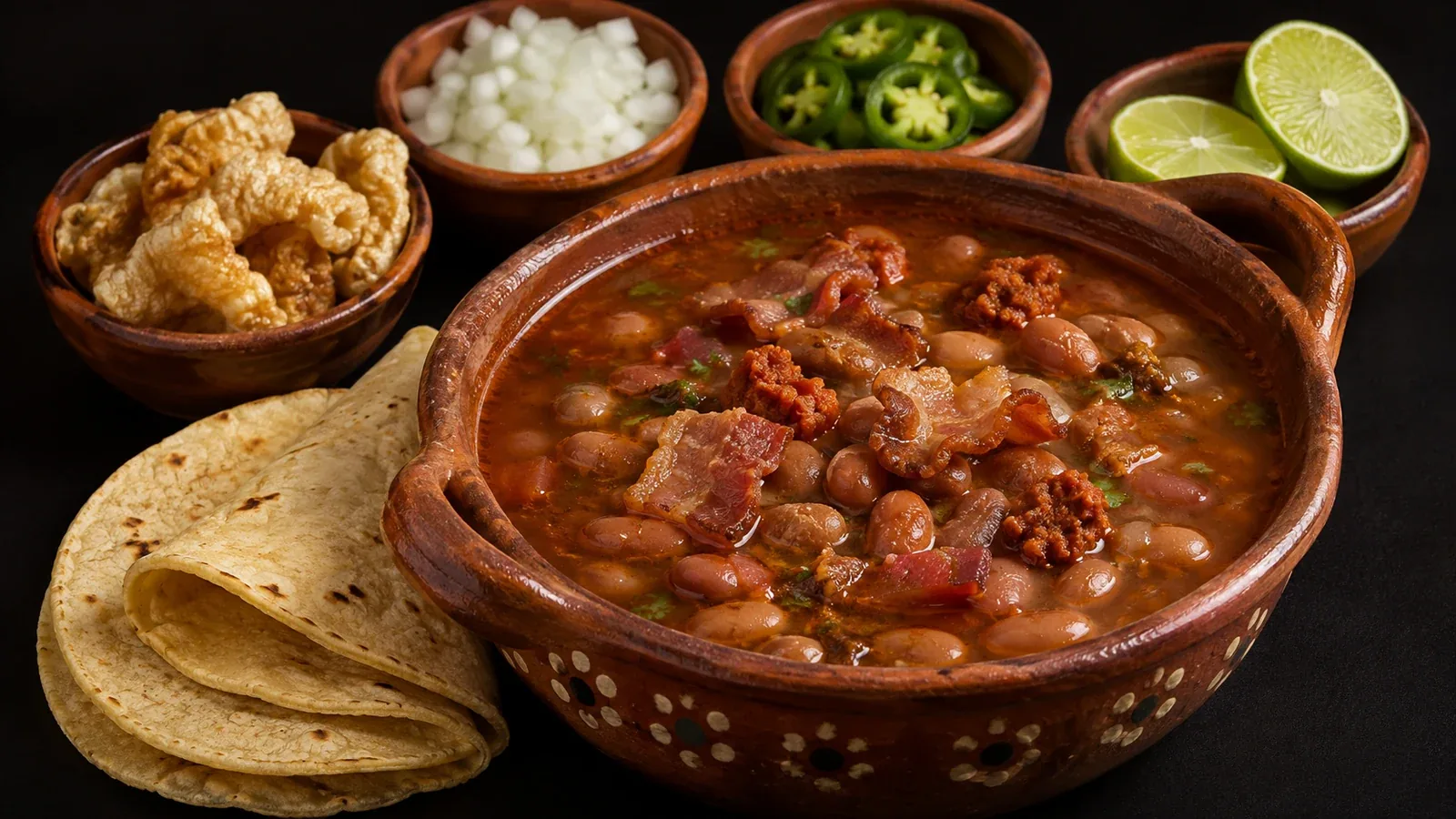
A brothy casserole from northern Mexico, built on bayo or pinto beans and their own broth, with bacon, fresh Mexican chorizo, tomato, chile and cilantro. The beans stay whole and very tender; the broth, flavorful and just bound by the natural starch, never reduced until it looks like a thick stew.
This version returns the preparation to the format of a substantial soup or spoon dish. The separate browning of the bacon, chorizo and sofrito concentrates the flavor without adding beef, paprika, cumin or a tostada that displace the identity of the dish.
Special equipment: pot of at least 4 liters
Ingredients
Pot beans
- 300 g dry bayo or pinto beans
- Water for soaking, as needed
- 1.8 liters fresh water, plus hot water if needed
- 80 g white onion, in one piece
- 2 garlic cloves, peeled and lightly crushed
- 8 g fine salt, plus more to adjust
Bacon, chorizo and sofrito
- 100 g bacon or smoked pancetta, in 1 cm dice
- 120 g fresh Mexican pork chorizo, casing removed
- 150 g white onion, finely chopped
- 2 garlic cloves, finely chopped
- 250 g ripe tomato or plum tomato, chopped with its juices
- 1 serrano chile, chopped; remove the seeds to moderate the heat
- 2 dried chiles de árbol, whole or lightly broken
- 15 g fresh cilantro, tender stems and leaves chopped separately
To serve
- 60 g pork cracklings (chicharrón), in pieces, optional
- 40 g white onion, finely chopped, optional
- 1 fresh or pickled jalapeño, in slices, optional
- 2 limes, in halves
- 12 corn tortillas
Method
Pot beans
- Soaking. Check and rinse the beans. Cover them with at least three times their volume of water and soak 8 to 12 hours. Drain and discard that water.
- Pot beans. Move the beans to a pot of at least 4 liters. Add the 1.8 liters of fresh water, the piece of onion and the crushed garlic. Bring to a boil, lower the heat immediately and cook at a barely perceptible simmer, partly covered, between 1 hour 15 minutes and 2 hours. Always keep them covered by liquid and add hot water when needed; a hard boil breaks the skin before softening the center.
- When a bean can be mashed between your fingers but still offers slight resistance at the center, add the 8 g of salt. Cook another 15–20 minutes, until creamy inside and keeping its shape. Remove the onion; leave the garlic, which will dissolve in the broth. Do not drain: all the beans and their broth form the base of the casserole.
Bacon, chorizo and sofrito
- Bacon and chorizo. During the last half hour of the beans' cooking, put the bacon in a cold pan and bring to medium heat. Cook 7–9 minutes, until it has released fat and the edges are golden, without drying it out completely. If there is more than 2 tablespoons of fat in the pan, remove the excess.
- Add the chorizo without casing and crumble it into small pieces. Cook 5–6 minutes, until it loses its raw look and begins to brown. It must be fresh Mexican chorizo, seasoned with chile and vinegar, not cured paprika chorizo.
- Sofrito. Add the 150 g of onion and cook 4–5 minutes, until translucent and barely golden. Add the garlic, cilantro stems, serrano chile and chiles de árbol; cook 30 seconds, only until they release aroma. Add the tomato with its juices and cook over medium heat 8–10 minutes. The tomato should soften and lose its raw taste, but keep enough moisture to blend into the broth.
- Combining. Pour all the sofrito into the pot of beans. Recover what clings to the pan with a ladle of the broth and return it to the pot. Cook uncovered, at a very gentle simmer, for 20 minutes to bring the flavors together and finish cooking the chorizo. If the liquid stops covering the beans comfortably, add hot water 100 ml at a time. Do not mash the beans or reduce them to a sauce: the result must remain brothy.
To serve
- Finishing. Taste the broth first and only then adjust the salt, because the bacon and chorizo bring a variable amount. Add the cilantro leaves and cook 2 minutes. Turn off the heat and rest 10 minutes. The broth should flow easily, look slightly cloudy from the starch and hold whole beans, bacon and chorizo in every ladle.
The dish
Use earthenware casseroles or hot deep plates, about 400 ml. Serve very hot, dividing beans and broth evenly, and arrange the bacon and chorizo on top so they show; the broth should just cover the beans. Bring to the table in small containers the chicharrón, onion, jalapeño and lime halves, so each diner finishes their portion to taste, and the hot corn tortillas in a tortilla warmer or wrapped in a kitchen towel. Final look: a reddish broth with whole, glossy beans, the golden bacon and chorizo on the surface, green dots of cilantro and the fresh accompaniments around.
Key points
- Use all the beans and their broth: the identity of the preparation is brothy, not thick or able to sit on a tostada.
- Choose fresh Mexican chorizo; cured paprika chorizo has a different texture and spice profile.
- Brown the meats without leaving an excess layer of fat: the broth should be flavorful, not oily.
- Keep a gentle simmer and add hot water when needed so the beans soften without breaking.
- Adjust the salt only after the bacon and chorizo are in.
Pairing
A very cold light Mexican lager goes with the heat and lightens the pork fat. As a non-alcoholic alternative, lightly sweetened hibiscus water with lime.
Notes
- Family versions may add ham, sausage, ribs or chicharrón inside the pot. Here the chicharrón stays as an optional garnish and no more meats are added so the bean keeps the lead.
- To turn them into frijoles borrachos (drunken beans), replace 150 ml of the adjusting water with 150 ml of amber beer and cook at least 20 minutes. Do not add just a spoonful: that amount does not define the variation.
- If Mexican chorizo is not available, use mild fresh pork chorizo and add to the sofrito 1 teaspoon of ground ancho or guajillo chile and 1 teaspoon of apple cider vinegar. It is a home approximation, not an identical replacement.
- If storing, divide the beans into shallow containers and chill them immediately. Refrigerate at 5 °C (41 °F) or below for up to 3 days and reheat the center to at least 74 °C (165 °F) before serving.